
Take a look at the below maps of Europe and North America side by side:
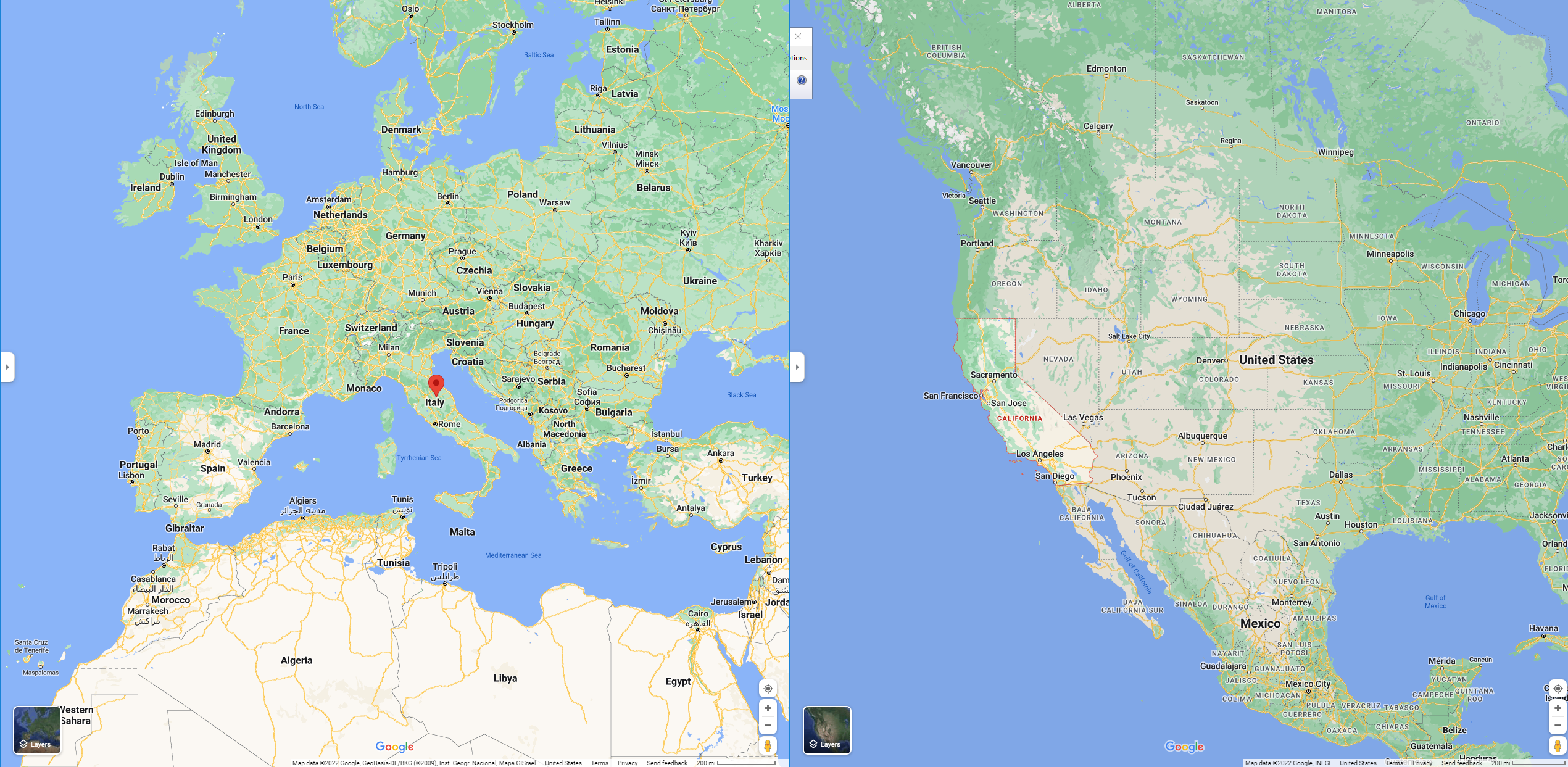
Each share the same scale, yet Europe has a lot more linguistic diversity than the North American continent. This was intentional on the part of Western European colonizers. California itself used to be home to over 300 indigenous languages with travelers unable to go more than 5 miles and communicate in the same language in some parts of California. While some efforts to unify all of humanity under one language time and time again (e.g. Esperanto) for various reasons have failed (I’d conjecture the main reason being that humans tend to exhibit bias in preferring if not loving the language and communication system which they are born into…), it should be noted that even when I communicate with others in a shared language that it doesn’t necessarily result in common ground or even a proliferation of ideas. This becomes apparent in politics where people who share the same language find themselves at odds with one another despite sharing the same language. So too in a household a child may share disagreement and discord with family members who share the same language.
Thus it behooves us as a species and existence in our universe to ensure that a diversity of languages exists and can be learned by all humans. To this extent, I believe that multi-lingualism is needed in today’s world to ensure that the most marginalized languages and communities and the ideas and worldviews contained therein are not lost forever as has sadly happened to many indigenous languages of the North American continent. Science has proven that monoculture is devastating to natural environments. I imagine the same principle can be applied to linguistic diversity. To ensure that we have as many ideas that can be understood and accounted for in a linguistic ecosystem should allow for a better world.

Leave a Reply